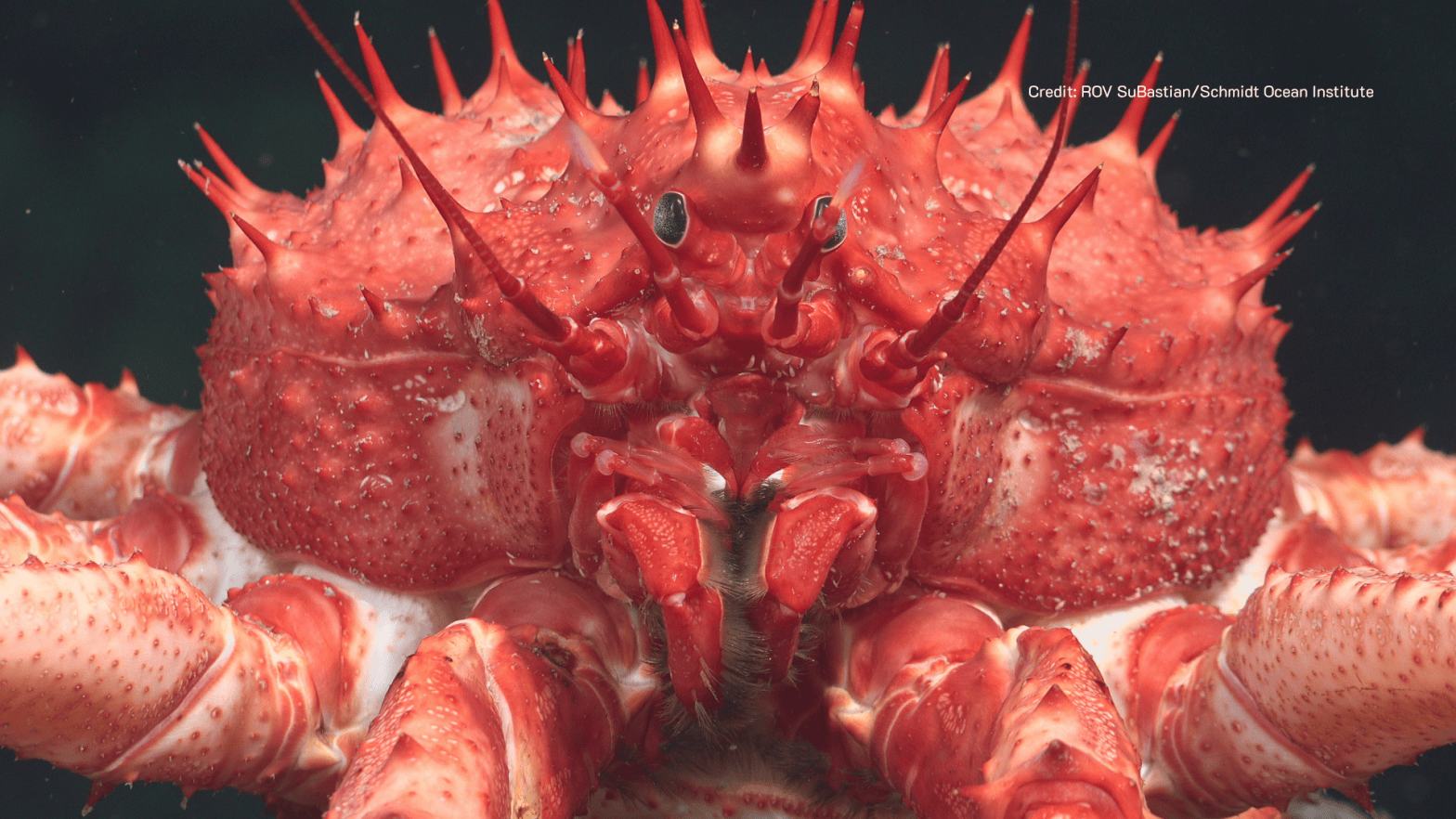
The team discovered 25 cold seep ecosystems, 20 suspected new species, and mapped 13% of the country’s uncharted seafloor.
High resolution images and videos available by clicking here.
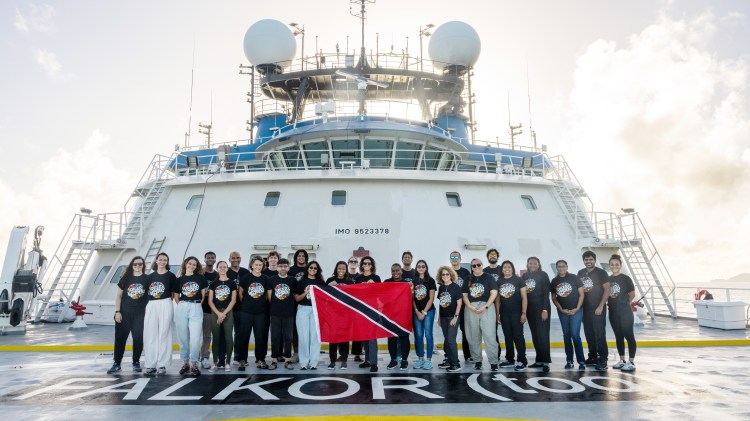
PORT OF SPAIN, Trinidad and Tobago — Marine scientists from Trinidad and Tobago
recently conducted the first locally led and most comprehensive deep-sea survey of the islands’ surrounding ocean during an expedition aboard Schmidt Ocean Institute’s R/V Falkor (too). During the month-long expedition (29 June to 28 July 2026), the team located over 25 active cold seeps, discovered 20 suspected new species, and mapped approximately 13% of the country’s marine territory.
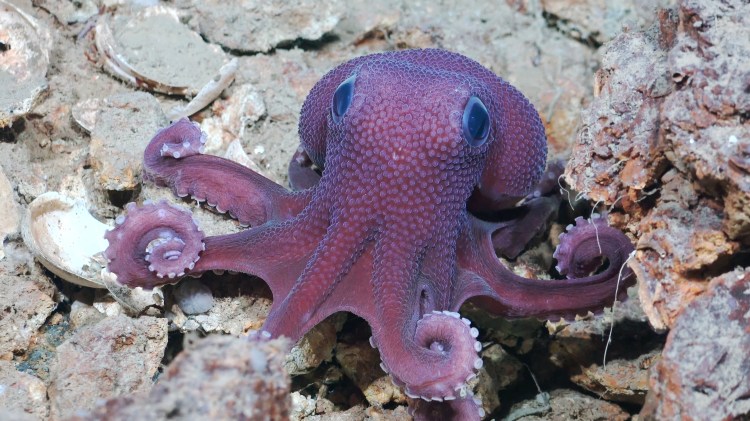
The potential new species include an octopus first discovered during a 2014 expedition, in which the expedition’s Chief Scientist, Dr. Diva Amon, participated. The scientists did not have the required data to confirm whether it was a new species in 2014, but will be able to confirm this with the data collected on the latest expedition.
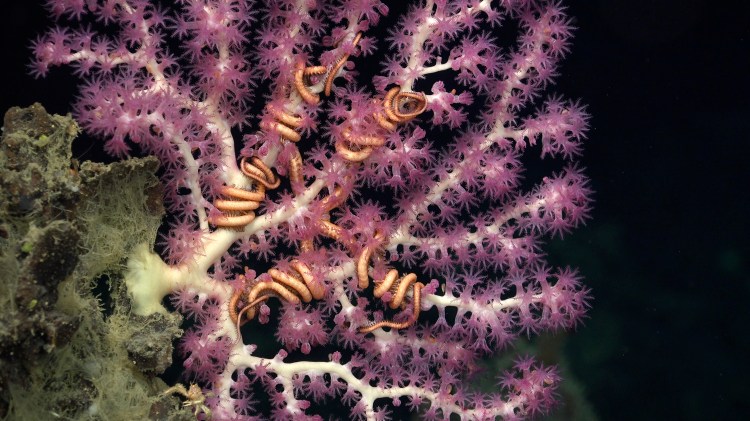
They also discovered corals, carnivorous sponges, and squat lobsters, among other animals. Over 700 specimens were collected, all of which will be housed at the Zoology Museum at the University of the West Indies, St. Augustine, in Trinidad and Tobago – increasing the size of the museum’s deep-sea collection twelve-fold.
“As the first locally led deep-sea expedition in Trinidad and Tobago’s history, these
discoveries are proof that Caribbean scientists can uncover our own deep-sea backyard,” said Amon, who also serves as co-director of the non-profit SpeSeas.
“Every new discovery we make, whether ecosystem, species or behavior, deepens our understanding of what’s at stake and strengthens our ability to be true stewards of this largely unseen but critical part of our country.”
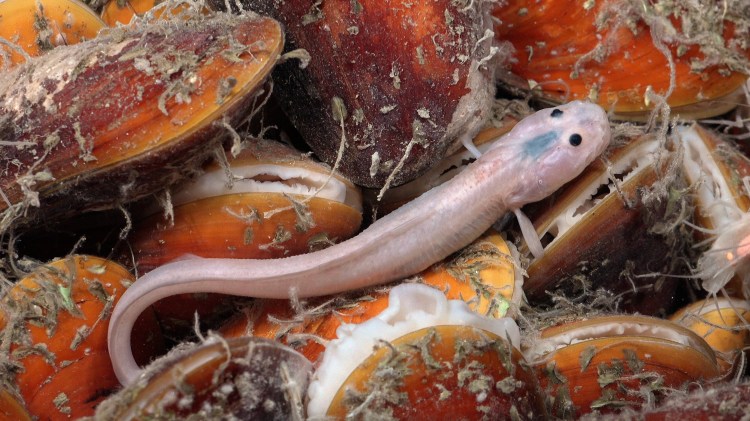
Over 11,335 square kilometres of Trinidad and Tobago’s uncharted seafloor was mapped. The scientists used this data to locate 219 bubble streams, indicators of possible cold-seep sites. Powered by chemical energy such as methane bubbling from the ocean floor, cold seep ecosystems support marine life – including mussels, clams, and tubeworms – through chemosynthetic bacteria rather than sunlight.
The team used the bubble streams to visually confirm 25 cold seep ecosystems with Schmidt Ocean Institute’s remotely operated vehicle (ROV), SuBastian. The largest cold seep is half an acre, less than one-third the size of a World Cup football field, and covered in mussels and tubeworms.
All the data collected, from mapping to biological data, will contribute to future marine governance and spatial planning efforts within Trinidad and Tobago, including the establishment of marine protected areas, said Amon.
The team also tested a novel cryoprotectant for preserving living animal tissues. The
cryoprotectant freezes tissue without damaging it, as is common with other deep-freezing methods like liquid nitrogen, ensuring that collected specimens retain their biological integrity for future research.
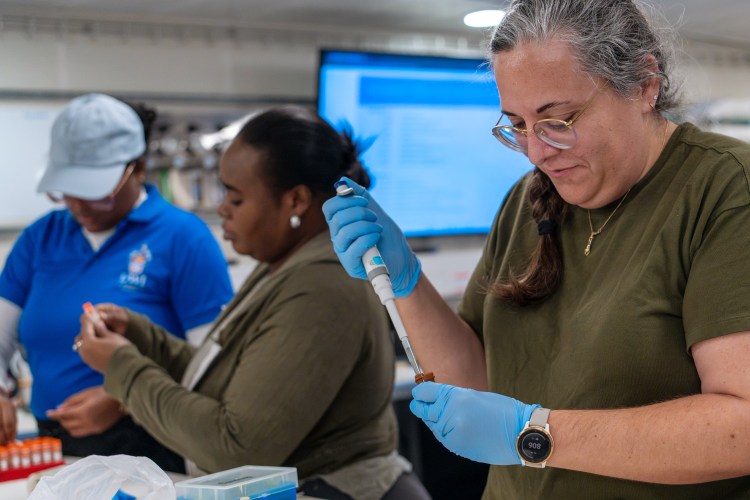
“Being part of this expedition was an incredible opportunity to help create the first ‘frozen zoo’ in the Caribbean,” said Dr. Megan Conkling, a research scientist from the Harbor Branch Oceanographic Institute at Florida Atlantic University.
“By cryopreserving tissues from more than 86 species of deep-water sponges, corals, and sea cucumbers, we’re preserving living biological resources that provide an invaluable baseline for understanding future ecosystem change.”
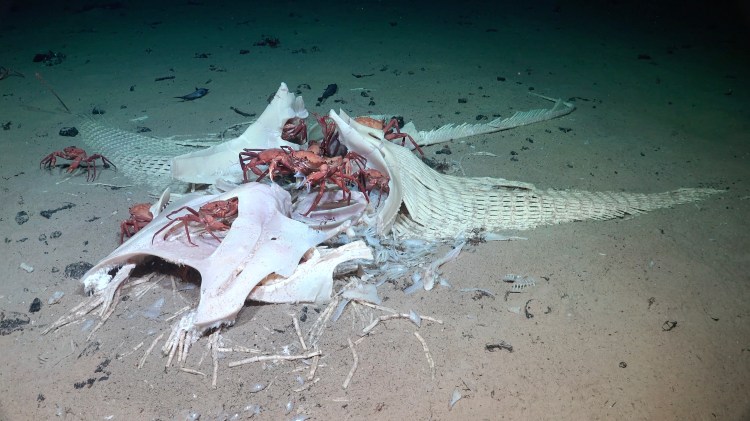
Other encounters on this expedition included a rare manta ray fall – a Mobula carcass resting on the seafloor – providing food for deep-sea animals such as crabs and worms. They also collected high-quality footage of a black swallower fish with a distended stomach, a natural phenomenon that occurs after the fish eats meals much larger than itself.
At least 54 species that had never been observed before in the country’s waters, including ghost sharks and zombie worms, were seen. Amongst all of the deep-sea discoveries was evidence of human-made trash, a reminder that places where humans have never been still bear our impacts, said Amon.
The scientists also engaged with the public before and during the expedition to raise
awareness of the deep sea among local and Caribbean residents. They engaged over 2,000 people via Schmidt Ocean Institute’s Ship-to-Shore program, from young students to non-profit organizations, universities, and government officials, and over 1,000 people through in-person visits to schools and universities before the expedition.
“The new cryoprotectant technique is a notable step forward for studies involving species preservation and will eventually democratize tissue sample preservation at sea,” said Dr. Jyotika Virmani, Executive Director of Schmidt Ocean Institute.
“Pairing these cutting-edge capabilities with local scientific expertise ensures that Caribbean researchers not only uncover the wonders in their own marine regions, but also lead the way in next-generation ocean science and stewardship.”
In total, close to 1000 water, sediment and animal samples were collected during the
expedition.
“How absolutely blessed we all were to have this incredible opportunity to get a glimpse of Trinidad and Tobago’s deep sea in 2026! Every sample from this expedition helps us advance knowledge about this remarkable ecosystem and provides a platform for evidence-based decision-making. I am delighted that we were able to take our nation, the Caribbean region & the international community along with us on this historic journey!” said Dr. La Daana Kanhai of the University of West Indies, St. Augustine.
About the Participating Organizations
Schmidt Ocean Institute (USA) was established in 2009 by Eric and Wendy Schmidt to catalyze the discoveries needed to understand our ocean, sustain life, and ensure the health of our planet through the pursuit of impactful scientific research and intelligent observation, technological advancement, open sharing of information, and public engagement, all at the highest levels of international excellence. For more information, visit www.schmidtocean.org. Contact: Kristen Kusek, kkusek@schmidtocean.org, +1 727-692-6482.
SpeSeas (Trinidad & Tobago) was established in 2017 to advance marine conservation through scientific research, education and advocacy in Trinidad and Tobago, and the wider Caribbean. For more information, visit https://speseas.org/. Contact: Diva Amon, divaamon@gmail.com, +1 868-689-SEAS(7327), info@speseas.org
The University of the West Indies, St. Augustine (Trinidad & Tobago). The University of the West Indies currently serves 17 English-speaking regional territories, offering undergraduate and postgraduate degrees in numerous fields of study: the arts, sciences, business, law, the humanities. Our university is currently in the top 4% of universities worldwide, the top 2% in Latin America and the Caribbean, and in the top 1% of the Golden Age University Rankings.
The Times Higher Education’s Impact Rankings in 2021 together with UNESCO base data has positioned The UWI in the top 2.5% of universities globally and we are the number 1 university in the Caribbean. St. Augustine is the main campus in Trinidad and Tobago. To learn more, visit www.sta.uwi.edu. Contact: Dr. La Daana Kanhai, ladaana.kanhai@uwi.edu.
The Institute of Marine Affairs (Trinidad & Tobago) is a multi-disciplinary governmental research organization that has been mandated to collect, analyze and disseminate information relating to the economic, technological, environmental, social and legal developments in marine affairs and to formulate and implement specific programmes/projects.
The Institute’s mission is to conduct and foster research and to provide advice for the sustainable management of the coastal and marine areas and resources of Trinidad and Tobago. Contact: Ms. Lorraine Barrow, Lorraine.Barrow@ima.gov.tt.
Florida Atlantic University (USA) serves more than 32,000 undergraduate and graduate students across six campuses along Florida’s Southeast coast. Recognized as one of only 13 institutions nationwide to achieve three Carnegie Foundation designations – R1: Very High Research Spending and Doctorate Production, Opportunity College and University, and Carnegie Community Engagement Classification – FAU stands at the intersection of academic excellence and social mobility.
Ranked among the Top 100 Public Universities by U.S. News & World Report, FAU is also nationally recognized as a Top 25 Best-In-Class College and cited by Washington Monthly as “one of the country’s most effective engines of upward mobility.” To learn more, visit www.fau.edu. Contact: Chelsey Matheson, cmatheson@fau.edu, +1 (772) 285-8903.
Dalhousie University (Canada). Located on Canada’s welcoming East Coast, with
campuses in the vibrant oceanside city of Halifax and an Agricultural Campus in the
town of Truro, Dalhousie welcomes 21,000 students from across the country and more than 110 countries around the world.
We are Nova Scotia’s leading research-intensive university, with 13 faculties that expand understanding through teaching excellence and a drive for discovery resulting in more than $258 million in external research funding each year. Contact: Kenneth Conrad, Communications Officer, Faculty of Science; Kenneth.Conrad@dal.ca.
University of Calgary (Canada). UCalgary is Canada’s entrepreneurial university, located in Canada’s most enterprising city. It is a top research university and one of the highest-ranked universities of its age. Founded in 1966, its 37,000 students experience an innovative learning environment, made rich by research, hands-on experiences and entrepreneurial thinking. UCalgary is the top start-up creator among Canadian universities over the past five years.
Start something today at the University of Calgary. For more information, visit ucalgary.ca. Stay up to date with UCalgary news headlines on Twitter @UCalgary. For access to UCalgary news releases, images and b-roll, and details on faculties and how to reach experts, check out our newsroom at calgary.ca/newsroom. Contact: Colette Derworiz, colette.derworiz@ucalgary.ca +1 403-815-1556 Lead Media and Communications, Faculty of Science.
Museo Nacional De Ciencias Naturales–Universidad Autónoma De Madrid (Spain).
Founded in 1771, the Museo Nacional de Ciencias Naturaleis one of the oldest natural history museums in the world and a leading European institution for scientific research in the natural sciences, owing largely to the immense scientific, historical, taxonomic, and taxidermic value of the zoological and geological specimens held in its collections.
It is also a flagship center of the Spanish National Research Council (CSIC) within the “Life” global research area and the “Earth and Environment” sub-area. Contact: (+34) 91 411 13 28, comunicacion@mncn.csic.es.
Ocean Discovery League (USA). Founded by deep-sea explorer Dr. Katy Croff Bell, Ocean Discovery League’s mission is to accelerate deep-ocean exploration by developing accessible systems to broaden the community of those who explore and understand the deep sea.
ODL is developing a strategic approach to expand the area of the seafloor that is explored, mapped, and characterized while reducing expenses by creating lower-cost, easier-to-use tools, technology, and training.
These actions, combined with a more targeted approach to selecting exploration locations, will expand deep-sea exploration to a broader community of researchers and explorers. Learn more at www.oceandiscoveryleague.org. Contact: Susan Poulton, susan@oceandiscoveryleague.org.
Supporting Organizations include Pure Ocean (France), The Pew Charitable Trusts
(USA), National Geographic Society (USA), The Explorers Club (USA), The Anthony N.
Sabga Caribbean Awards for Excellence (Trinidad & Tobago), Harbor Branch
Oceanographic Institute, Florida Atlantic University (USA), CryoCrate (USA).
Team Members
● Dr. Diva Amon, Chief Scientist (SpeSeas, T&T)
● Dr. Anjani Ganase, Co-Principal Investigator (IMA, T&T)-Shore-based
● Dr. La Daana Kanhai, Co-Principal Investigator (UWI, St. Augustine, T&T)
● Dr. Megan Conkling, Co-Principal Investigator (Florida Atlantic University, USA)
● Dr. Rachel Lauer, Co-Principal Investigator (University of Calgary, Canada)
● Dr. Anna Metaxas, Co-Principal Investigator (Dalhousie University, Canada)
● Dr. Katy Croff Bell, Collaborator (Ocean Discovery League, USA)
● Dr. Juliano Palacios Abrantes, Collaborator (Brasil / Mexico)
● Dr. Shirley Pomponi, Collaborator (USA)
● Dr. Farahnaz Solomon, Collaborator (IMA, T&T)
● Zaheer Hosein (UWI, St. Augustine, T&T)
● Jaime-Leigh Lue Chin (UWI, St. Augustine, SpeSeas, T&T)
● Ana Beatriz Naranjo Elizondo (Costa Rica)
● Eugenia Thomas (UWI, St. Augustine, T&T)
● Shauna Edghill (T&T)
● Kyle Foster (UWI, St. Augustine, T&T)
● Ryan Mannette (SpeSeas, T&T)
● Robert Perrin (University of Calgary, Canada)
● Aleisha Dennie (IMA, T&T)
● Alyssa Beharry (UWI, St. Augustine, T&T)
● Cyran Benjamin (UWI, St. Augustine, T&T)
● Shalanka Ranjula Millawitiya Arachchilage (UWI, St. Augustine, T&T)
● Cherisse Persad (University of Plymouth, UK)
● Shae Roman (UWI, St. Augustine, T&T)
● Charlotte Tom (SpeSeas, T&T)
● Sydney Christopher (UWI, St. Augustine, SpeSeas, T&T)
● Robert Cassidy (MNCN, Madrid, Spain)

