Exploring the deep ocean, close to home
Around 70% of nations have deep-sea environments within their Exclusive Economic Zones, yet only 16% have the capacity to explore them. This gap is particularly pronounced in developing countries, where limited access to technology, expertise and resources can hinder scientific research, informed decision-making and public understanding of the deep ocean.
My Deep Sea, My Backyard was a pilot project designed to help change this by empowering countries to explore their own deep-sea environments using accessible, low-cost technology while building local capacity for future ocean research.
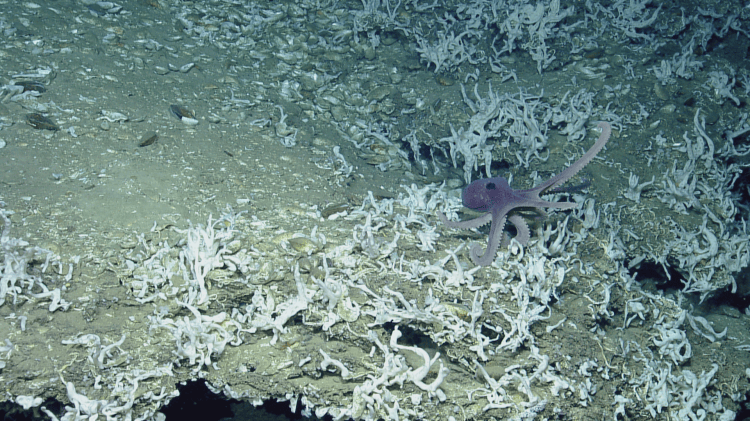
Running from 2018 to 2019, the project brought together partners in two Small Island Developing States: Trinidad and Tobago and the Republic of Kiribati. Using deep-sea drop cameras developed by National Geographic’s Exploration Technology team and OpenROV Trident remotely operated vehicles (ROVs), researchers explored mesophotic reefs and deeper marine environments, capturing imagery of ecosystems that had received limited scientific attention.
By making deep-sea exploration more accessible, the project demonstrated how relatively affordable technologies can help countries begin investigating their own underwater environments and build the knowledge needed to manage them.
Why explore our deep ocean?
The deep ocean is the largest part of Trinidad and Tobago’s marine environment and the largest ecosystem on Earth, providing more than 95% of the planet’s habitable space. It plays an important role in regulating the climate, cycling nutrients and storing carbon. It also supports biodiversity and provides resources, including food, energy, minerals and compounds with potential pharmaceutical applications.
These ecosystems are particularly important to Trinidad and Tobago, where deep-water oil and gas exploration has significant economic implications. Understanding what lives in these environments, how they function and how human activities affect them is essential to making informed decisions about their future.
We cannot effectively protect or manage ecosystems we do not understand. Exploration is an important first step towards building that understanding and ensuring that decisions about our ocean are informed by science.
A healthy planet depends on a healthy deep ocean.
Project goal
To strengthen the capacity of Trinidad and Tobago and other nations to explore their deep-sea environments using accessible, low-cost technology, generating knowledge and building local expertise to support ocean science, informed management and long-term stewardship.
Research and outcomes
The project contributed to broader efforts to understand and strengthen global deep-sea research capacity.
- Scientific publication: Read the research associated with the project in the Philosophical Transactions of the Royal Society B: Read the paper.
- Global Deep-Sea Capacity Assessment: The project contributed to wider work examining countries’ capacity to explore and research the deep ocean. Explore the assessment.
- Further research: Read the related publication in Frontiers in Marine Science: Read the paper.
Project partners and funders
Partners: The University of the West Indies (UWI), NIHERST, COAST Foundation, MIT Media Lab, Deep-Ocean Stewardship Initiative (DOSI) and Boston University.
Funders: National Geographic and the Inter-American Development Bank (IDB).


what is the draw back for small islands
LikeLike